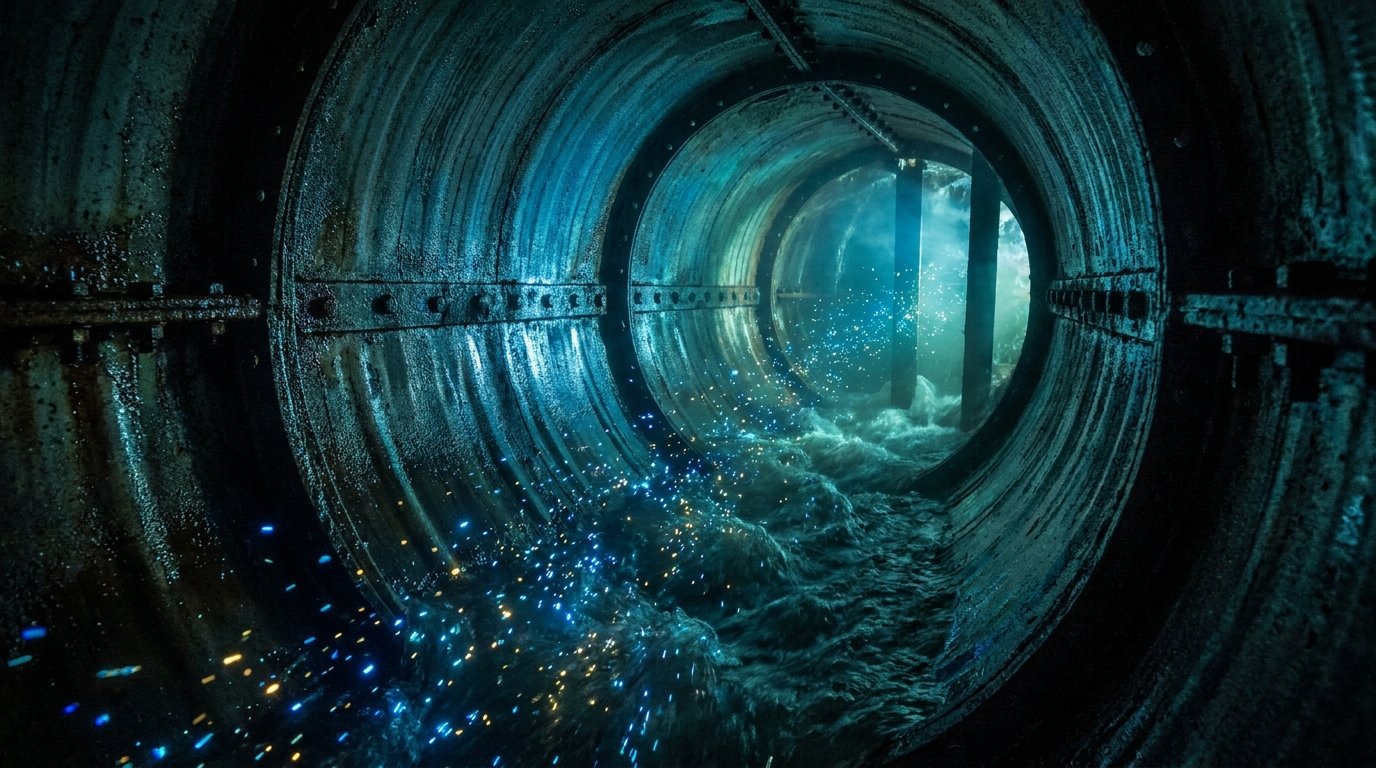
PV WCS — Physical Water Conditioning
Don't Fight Hard Water. Change Its Behaviour.
Scale formation is one of the most persistent, costly, and underestimated threats to industrial water-dependent equipment. Most approaches try to remove minerals or counteract them with chemicals. PV WCS takes a different position entirely.
A physical water-conditioning system that works at the crystal-formation stage — before scale ever reaches a pipe wall, heat exchanger surface, or boiler tube. Physics, not chemistry.
The Real Cost of Scale Is Rarely on One Line of a Budget
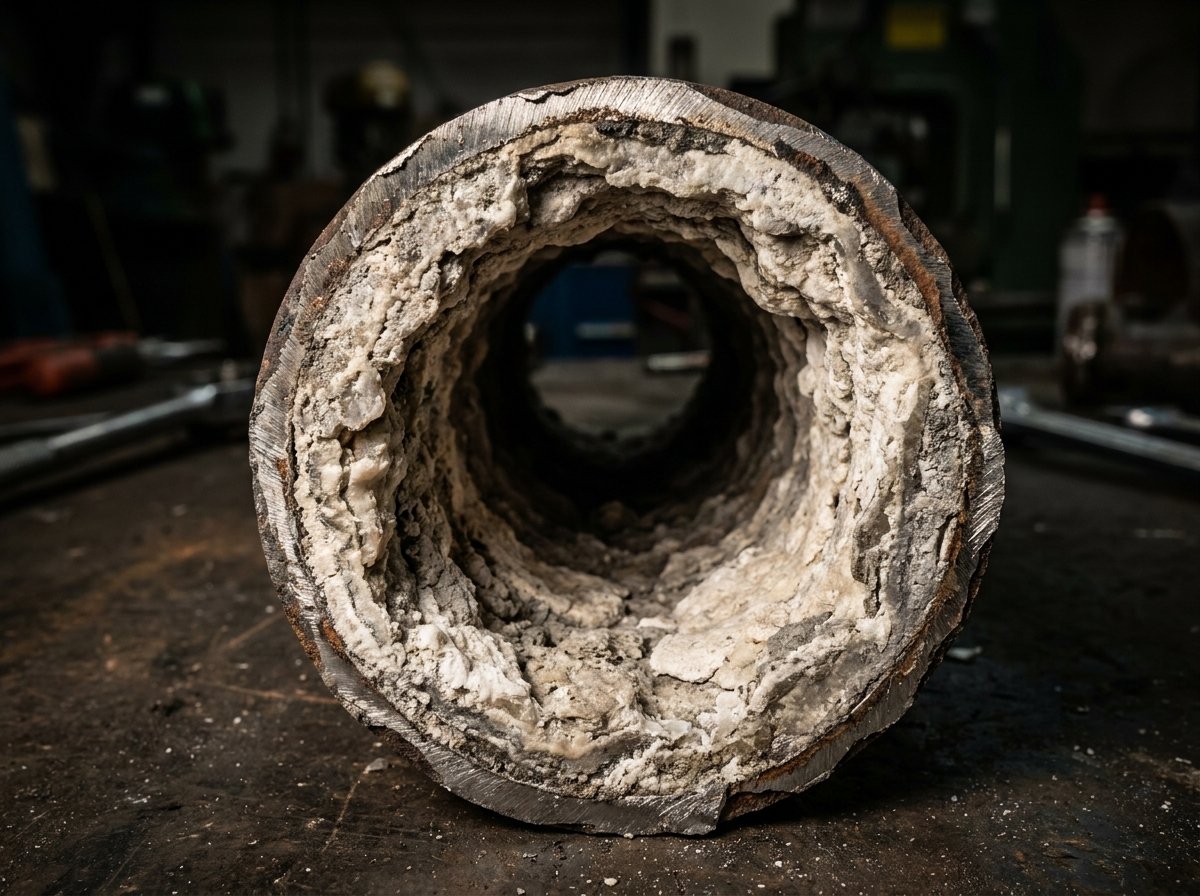
Hard-water scale builds gradually. It forms inside heat exchangers, on boiler surfaces, inside cooling tower fill, along pipeline walls, and through HVAC coils — working quietly against your equipment's intended performance.
Even a thin layer acts as an insulating barrier inside heat exchangers, reducing heat transfer rates. Your equipment works harder for the same output — which means higher energy consumption for the same result. In pipelines, scale reduces the internal bore over time, restricting flow and increasing pressure demands across the system.
Frequent descaling interventions consume time, labour, and specialist chemicals. Unplanned shutdowns cause production downtime. And if your current approach relies on chemical dosing or salt-based softening, you carry recurring consumable costs and compliance burdens — month after month. Scale formation is not an inconvenience. For water-intensive operations, it is a sustained operational and commercial liability.
PV WCS: Science, Not Chemistry
PV WCS is a physical water-conditioning system developed to address hard-water scaling at its source — the point at which dissolved minerals begin forming crystals in the water itself.
Unlike chemical dosing, PV WCS introduces no chemicals into your water system. Unlike salt-based softeners, it does not remove minerals. Instead, it works by influencing the physical behaviour of those minerals at the crystal-formation stage — so that crystals form as microscopic, non-adherent particles that remain suspended in the water flow rather than bonding to equipment surfaces.
By conditioning how minerals crystallise rather than removing or reacting with them, the system works with the physics of water rather than against it. PV WCS installs into existing pipeline infrastructure with a 5-year product warranty and minimal ongoing maintenance.

Chemical Treatment
Addresses the symptom by trying to neutralise or chelate scale-forming minerals. Requires dosing systems, consumables, and chemical-handling procedures.
Salt-Based Softening
Removes minerals via ion exchange, consuming salt and generating brine discharge. Requires regeneration cycles and ongoing salt purchasing.
PV WCS Physical Conditioning
Addresses the underlying mechanism: crystal nucleation and growth behaviour. No chemicals, no salt, no brine — just physics conditioning how minerals behave.
How Physical Water Conditioning Works
Conventional Scale Formation
When hard water flows through an untreated system, dissolved calcium and magnesium salts precipitate as water is heated or pressure changes — forming hard, adherent crystals that bond to pipe walls, heat transfer surfaces, and equipment components.
Physical Conditioning of Crystal Formation
PV WCS physically conditions the water as it passes through the system, influencing the nucleation and growth behaviour of mineral crystals. When conditioned correctly, the minerals still precipitate — but the crystals are microscopic, structurally different, and far less likely to adhere to metal surfaces.
Suspended Crystals Carried Through the System
These conditioned crystals remain suspended in the water flow and are carried through and out of the system rather than accumulating on surfaces. Over time, conditioned water contacting existing deposits may help to gradually loosen them — though the rate and extent varies by system, water chemistry, temperature, and scale composition.
Integration Into Existing Infrastructure
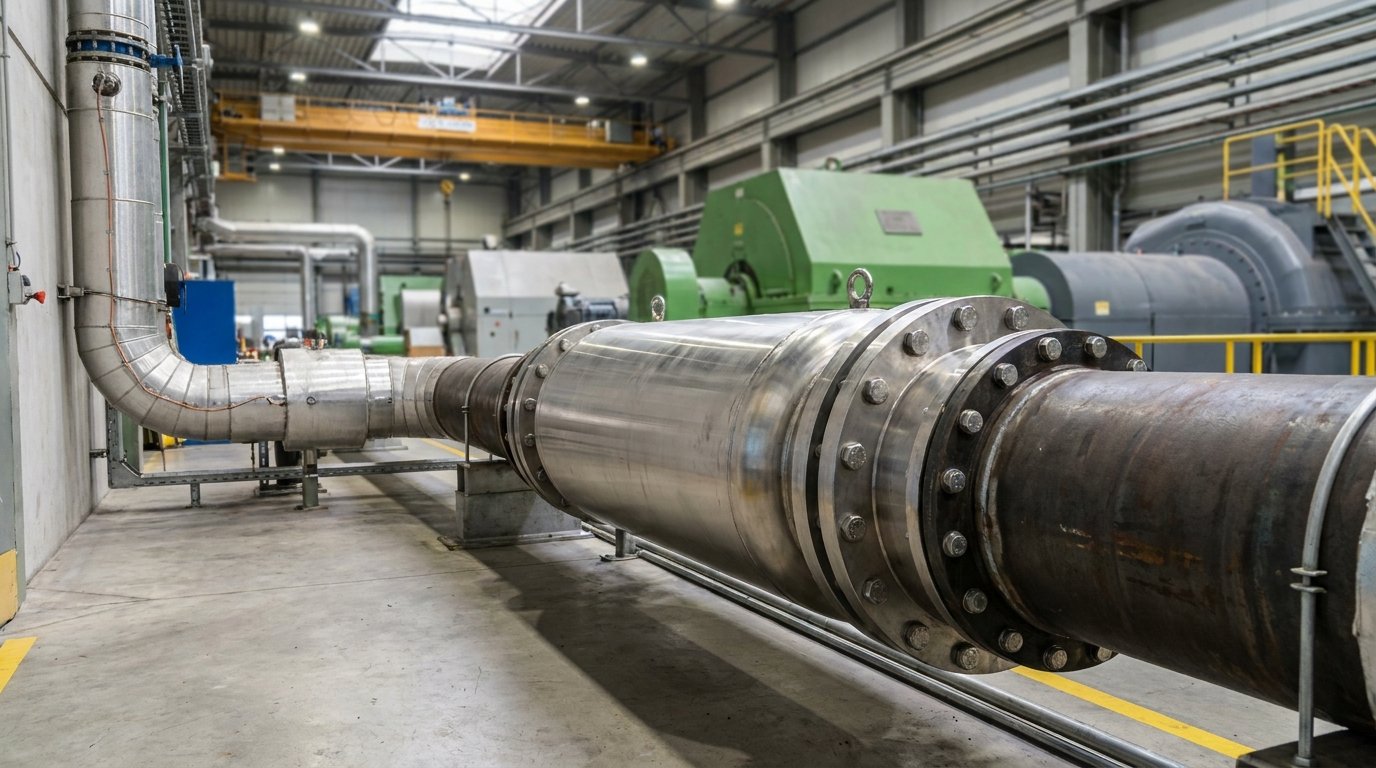
PV WCS integrates directly into existing pipeline systems — no infrastructure redesign, no decommissioning of existing equipment. The system operates passively: no electrical power input, no chemical dosing, no salt. Straightforward to incorporate into the maintenance regime of most industrial or commercial water systems.
A More Considered Approach to Water Conditioning
Chemical dosing and salt-based softening are established approaches, and in some contexts they remain appropriate. But for many industrial and commercial operations, they carry operational burdens that compound over time. PV WCS represents a different set of trade-offs — one worth evaluating seriously.
No Chemicals Required
No dosing pumps to calibrate, no chemical stocks to manage, no handling procedures to maintain, and no chemical inputs entering your water or wastewater stream.
No Salt
Unlike traditional ion-exchange softeners, PV WCS does not use salt. No brine discharge, no salt purchasing cycle, and no regeneration downtime.
Minimal Recurring Consumables
Once installed, PV WCS operates without the routine consumable costs associated with chemical treatment programmes. The ongoing cost profile is substantially different from dosing-based approaches.
Minimal Maintenance
No moving parts requiring regular servicing, no chemical feed systems to inspect and adjust, and no salt levels to monitor and replenish.
Integrates Into Existing Systems
Installs into your existing pipeline infrastructure. No need to replace or redesign your water system — lower implementation complexity and disruption.
Conditions Mineral Behaviour, Not Content
Influences how dissolved minerals crystallise — producing microscopic, non-adherent crystals that stay suspended in the flow. The minerals remain; their behaviour is what changes.
5-Year Product Warranty
PV WCS carries a 5-year product warranty, reflecting the engineering confidence behind the system's design and expected service life.
Supports Sustainable Practice
Removing chemical inputs and salt from the conditioning process supports water-management practices with a reduced environmental footprint — relevant to facilities with sustainability targets or reporting obligations.
Where PV WCS Is Applied
Hard-water scaling affects a wide range of industrial and commercial equipment. PV WCS is applicable wherever water-dependent systems are exposed to hard water and where scale formation affects performance, maintenance frequency, or equipment life.
Cooling Towers
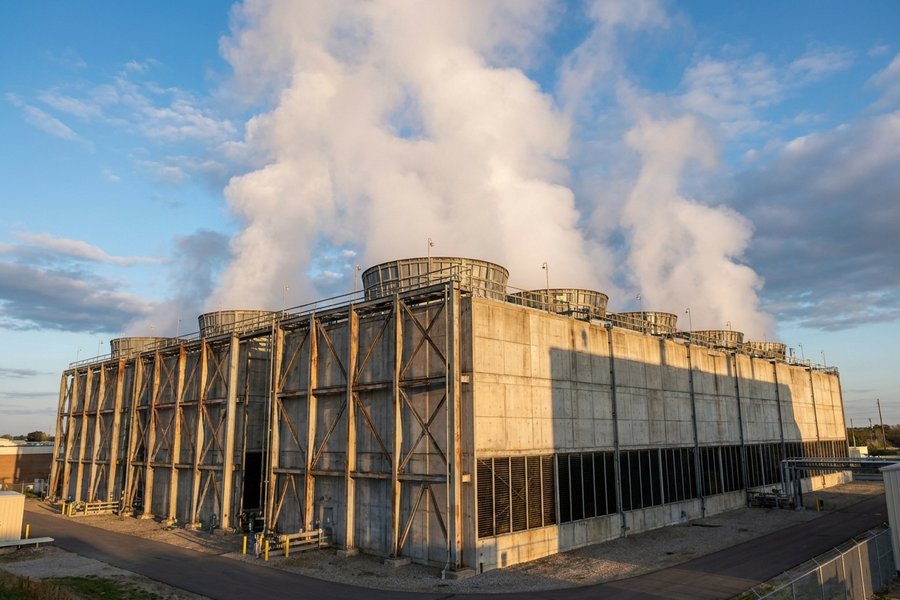
High-evaporation conditions concentrate dissolved minerals and accelerate scale formation on fill, basin surfaces, and distribution nozzles. PV WCS integrates into cooling tower water circuits to help reduce scale adhesion in these high-risk areas.
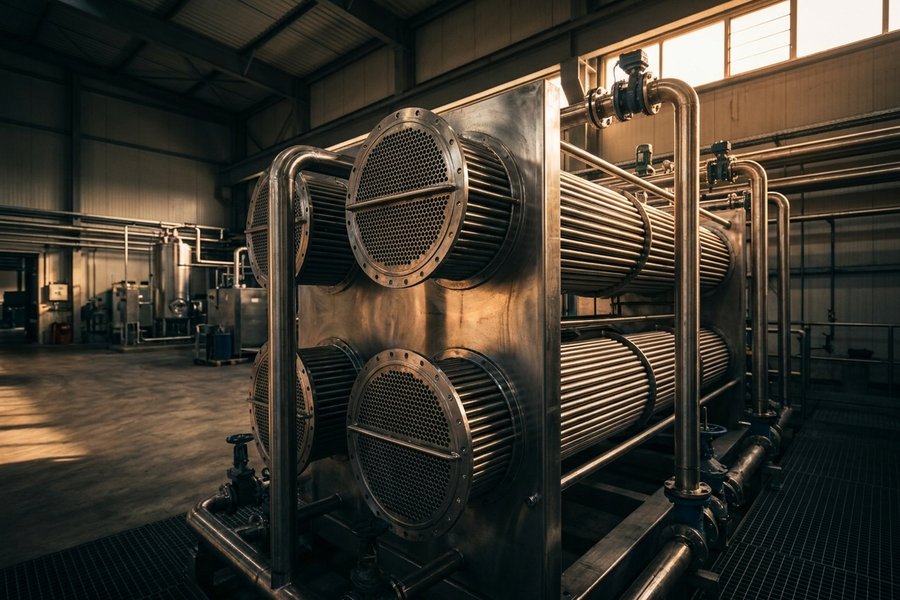
Heat Exchangers
Scale on heat exchanger surfaces acts as a thermal barrier, reducing heat transfer efficiency and increasing energy required to reach target temperatures. PV WCS conditions incoming water to help reduce adherent scale build-up on transfer surfaces.
Boilers
Scale inside boiler tubes can lead to localised overheating, tube failure, and unplanned shutdowns. PV WCS can be applied to boiler feed water circuits to help reduce the adherence of scale-forming deposits on boiler tube surfaces.
HVAC Systems
Chiller units, condenser coils, and closed-loop HVAC circuits are all susceptible to scale build-up that reduces thermal performance and increases maintenance requirements. PV WCS integrates without disrupting existing system architecture.
Process Water Lines
In manufacturing and processing environments, scale in process water lines restricts flow, increases pumping energy, and can contaminate process outputs. PV WCS helps maintain cleaner internal pipe surfaces across process water infrastructure.
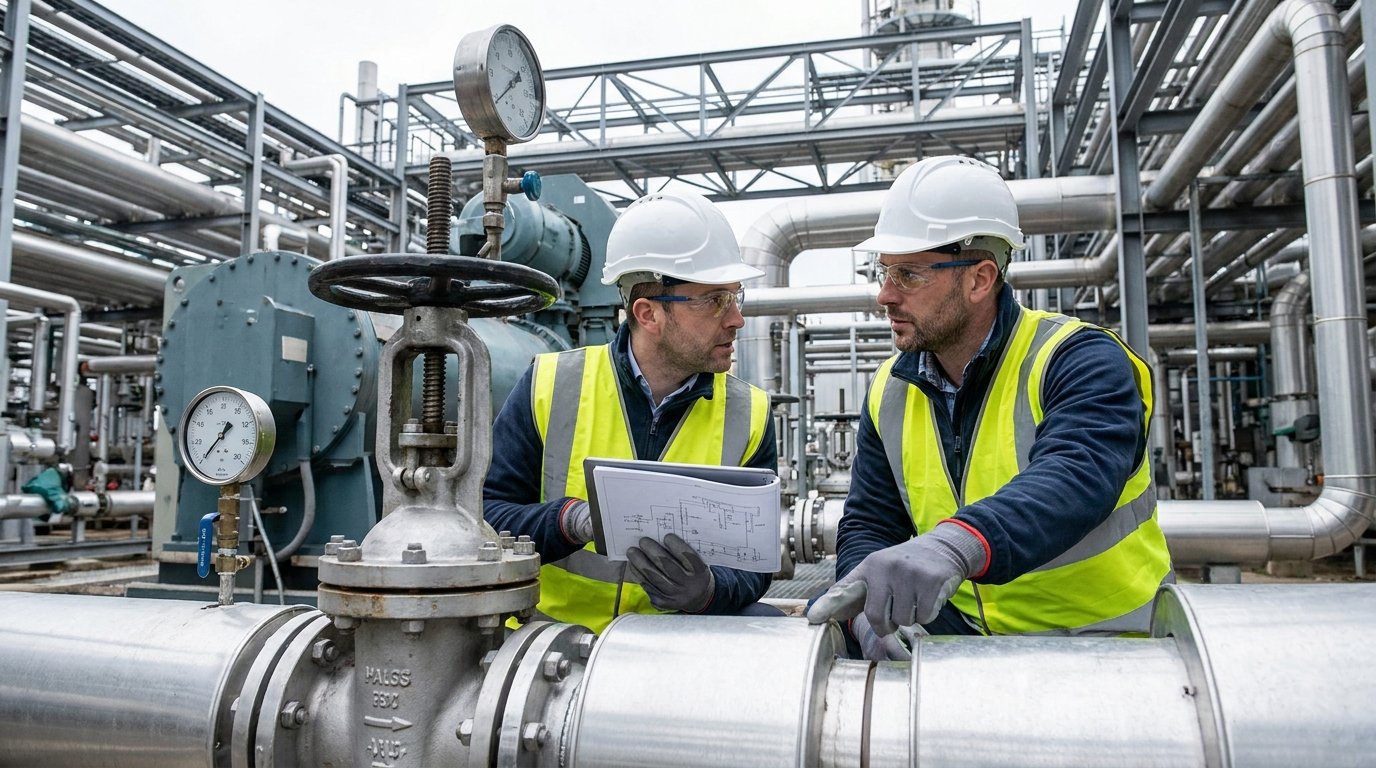
Manufacturing and Industrial Facilities
Manufacturing operations — including steel, automotive, textile, and general industrial processing — rely on water-intensive equipment where scale-related downtime and efficiency losses carry direct production cost implications.
Industries Served
Why Decision-Makers Trust PV WCS
Evaluating a water-conditioning system requires more than a product claim. It requires evidence that the system is engineered to a recognised standard, performs in real industrial conditions, and is backed by credible technical support.
5-Year Product Warranty
PV WCS carries a 5-year product warranty. For plant managers and procurement teams, this provides a meaningful indication of the engineering standard behind the product and a formal commitment to its performance — not a provisional assurance.
ISO Certification
Procon Ventures holds ISO certification relevant to its operations. The specific certification reference is currently being confirmed and will be published once verified. We do not publish certification claims we cannot substantiate precisely.
Industrial Application References
PV WCS has been applied across industrial settings. Procon-approved application references are available to qualified enquiries during the technical consultation process. We do not publish client names or project details without explicit approval.
Expert Technical Support
Every enquiry is handled by engineers and technical specialists who understand industrial water systems. The consultation process is designed to assess your specific application, water chemistry, and equipment context — not to deliver a generic product pitch.
Transparent About What We Don't Yet Publish
We have not published quantified performance statistics, named case studies, or ROI claims that have not been validated and approved for release. In a category where exaggerated claims are common, that transparency is itself a trust signal.
Start With a Conversation, Not a Commitment
Procon Ventures provides a structured engagement process designed for industrial decision-makers who are evaluating whether physical water conditioning is the right fit for their specific application. Every stage is low-risk and technically grounded.
Free Technical Consultation and Application Evaluation
Your first conversation costs nothing. Our technical team will assess your current water system, scaling challenges, equipment types, and water chemistry context to determine whether PV WCS is applicable — and to what extent it may help.
Application Assessment
A detailed assessment that considers the specific conditions of your installation: water hardness, temperature profiles, flow rates, equipment configuration, and current maintenance regime. This informs a conditioning recommendation appropriate to your actual operating context.
Product Demonstration
For qualified applications, Procon Ventures can arrange a product demonstration so that your engineering and operations teams can evaluate PV WCS performance directly, rather than on the basis of claims alone.
PV WCS Installation
PV WCS integrates into existing pipeline systems. Our technical team supports the installation process to ensure the conditioning system is correctly specified and positioned for your application.
Expert Technical Support
Ongoing technical support following installation. If your operating conditions change, if you expand your water infrastructure, or if you have questions about system performance, our technical team is available to assist.
Brochure Download
If you are in early evaluation mode, our product brochure provides a detailed technical overview of PV WCS — its operating principle, application range, specifications, and differentiating characteristics. Download it to share with your engineering or procurement team.
Partner With Procon Ventures
PV WCS addresses a problem that exists across virtually every industry where water-dependent equipment operates in hard-water regions. If your business serves those industries, a partnership with Procon Ventures gives you a differentiated, chemical-free conditioning product to offer clients who are looking for alternatives to chemical dosing or salt-based softening.
We are developing dealer and distribution partnerships with organisations that have established relationships in the industrial equipment, water treatment, HVAC, and engineering sectors. Partnership enquiries are handled directly by our team.
Become a Partner
Industrial Equipment Dealers
If you supply or service industrial equipment — including cooling towers, heat exchangers, boilers, or process water systems — PV WCS gives you a complementary product that addresses the water quality conditions in which your equipment operates. Offering a chemical-free conditioning option adds a consultative dimension to your offer and a recurring conversation point with customers managing scale-related maintenance costs.
Water Treatment Companies
Physical conditioning and chemical treatment are not mutually exclusive in all applications. Water treatment companies that currently offer chemical dosing programmes or water analysis services can extend their portfolio with PV WCS as an alternative or complementary approach — particularly for clients where chemical handling, consumable costs, or sustainability considerations are driving a review of their current treatment programme.
Engineering Consultants
Engineering consultants specifying water management systems for new facilities or infrastructure upgrades are increasingly asked to consider the full life-cycle cost and environmental footprint of treatment approaches. PV WCS gives consultants a technically credible, low-intervention conditioning option for clients where chemical-free operation is a design objective or a procurement preference.
HVAC Solution Providers
HVAC system integrators and service providers work with clients whose chiller plant, condenser circuits, and closed-loop systems are directly affected by hard-water scaling. PV WCS can be incorporated into HVAC system designs or offered as a retrofit conditioning solution — adding a scale-management dimension to your service without adding chemical handling complexity for the client.
Industrial Solution Integrators
If your business designs or integrates water infrastructure solutions for manufacturing, processing, or large commercial facilities, PV WCS can be incorporated as a standard element of your water conditioning specification. Its installation simplicity, low maintenance profile, and 5-year warranty make it straightforward to include in a broader system design without adding operational complexity for your clients.
Ready to Evaluate PV WCS for Your Operation?
Whether you are at the early research stage or ready to specify a conditioning system for a current project, Procon Ventures has a structured entry point that fits where you are in the process.
Get in Touch
Use the form to send your enquiry directly to the Procon Ventures team. Select the enquiry type that best matches your current need. We will route your enquiry to the right person and respond promptly.
Niranjanpur Road, Indore,
Madhya Pradesh, 452001, India